Accessibility for AI: Beyond ADA Compliance
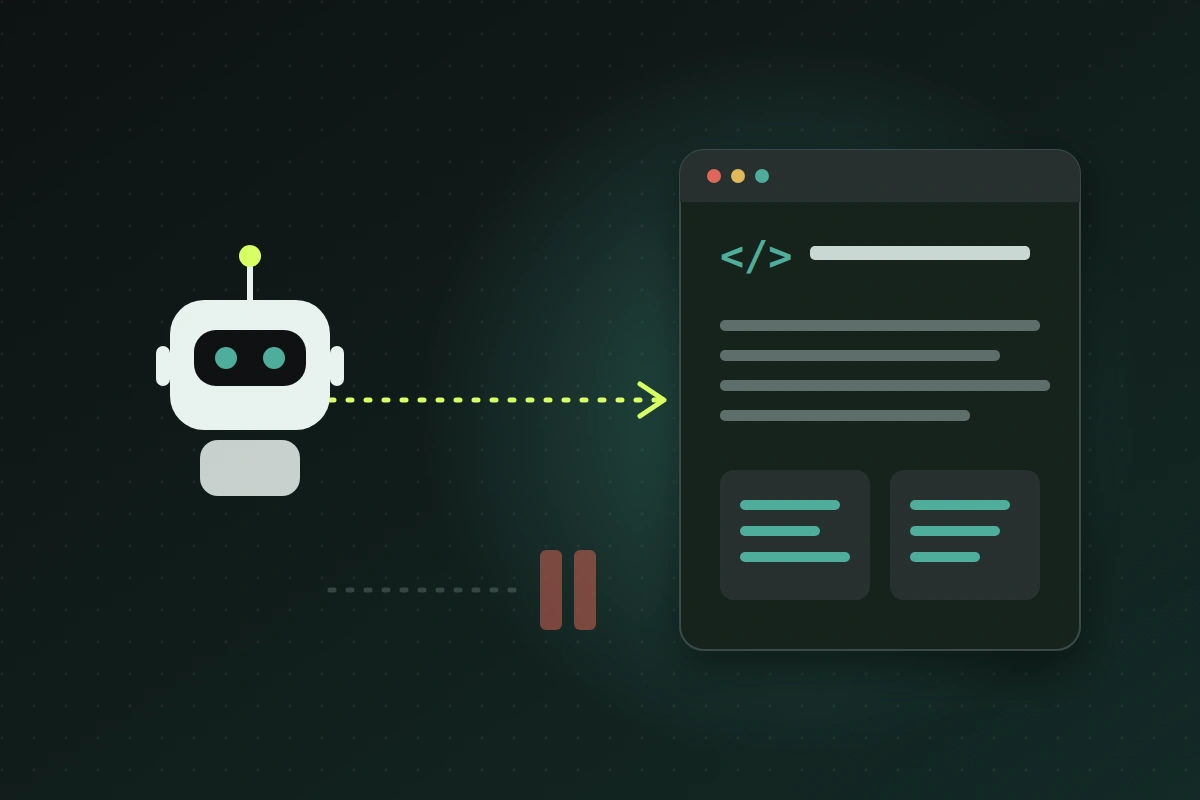
For years, “accessibility” has been synonymous with ADA compliance—ensuring digital experiences are usable for people with disabilities. While this remains essential, a new dimension of accessibility has emerged in 2025: accessibility for AI systems.
Search engines, LLMs, and generative models now consume, interpret, and distribute your content across Zero-Click results, AI Overviews, chat interfaces, and voice assistants. This means accessibility now applies not only to humans, but also to the machine readers that determine your online visibility.
Modern SEO is no longer measured by how well humans navigate your website—but by how well AI crawlers can access, parse, and understand your content.
Welcome to the new era of AI Accessibility.
What Is AI Accessibility?
AI Accessibility refers to how easily AI systems—like Google’s AI crawlers, Gemini, GPT-5, Perplexity, and Bing—can:
- Retrieve your content
- Render your content
- Understand your structure
- Extract your facts
- Build accurate summaries
- Represent your business in generative answers
It focuses on removing technical, structural, and semantic barriers that prevent AI from accurately interpreting your site.
AI accessibility is not replacing ADA compliance—it is a new additional layer of optimization, critical for digital visibility in the AI-driven web.
Why AI Accessibility Matters in 2025
1. AI Systems Are Now the Primary “Readers” of Your Website
Before a human sees your content, AI systems often see it first. AI models determine:
- whether you appear in Zero-Click results
- whether your facts are trusted
- whether your site is included in generative summaries
- whether your business is represented correctly
- whether you show up in map results, AI panels, or voice search
If AI cannot access or interpret your content, your business becomes invisible—even if your site looks perfect to human visitors.
2. JavaScript Dependency Breaks AI Understanding
Most websites hide content behind:
- heavy JavaScript
- lazy-loaded components
- modals
- dynamic rendering
- client-side frameworks
Humans can see the fully rendered page; AI often cannot. Many AI crawlers do not execute heavy JavaScript reliably. This means core content never loads for the machine reader.
Result:
- ❌ Missing facts
- ❌ Missing services
- ❌ Missing pricing
- ❌ Missing descriptions
If the crawler can’t retrieve it, the AI model can’t use it.
3. AI Needs Predictable Structure, Not Creative Layout
AI isn’t visual. It doesn’t see design. It reads structure. When your markup looks like “div soup”:
<div><div><div class="box"><div>Text here</div></div></div></div>AI has to guess what each part means—and usually guesses wrong. AI Accessibility requires:
- semantic tags
- logical heading hierarchy
- lists for itemized content
- consistent page structure
- predictable document flow
AI interprets meaning from structure, not style.
4. Broken Links, Redirect Loops, Blocked Resources Break AI Trust
AI systems penalize websites with:
- broken pages
- blocked JS/CSS
- repeated 404s
- bad redirects
- disallow rules in robots.txt
- slow server responses
- inaccessible images
- missing alt text
A site that is technically unreliable becomes an untrustworthy data source. You may see no issues visually—but your AI visibility collapses because the machine reader hits a dead end.
5. AI Accessibility Prevents Hallucinations About Your Business
AI models hallucinate when:
- content is unclear
- facts are missing
- pages are blocked
- relationships are ambiguous
- your site loads inconsistently
Hallucinations produce:
- ❌ Wrong address
- ❌ Wrong pricing
- ❌ Wrong services
- ❌ Incorrect business descriptions
- ❌ Outdated information
Improving AI Accessibility ensures your business is represented correctly across all AI platforms.
The Three Pillars of AI Accessibility (AIA Matrix – AI Access (A))
The AIA Matrix defines AI Accessibility as a combination of three core components:
1. Direct Content Access
AI must be able to retrieve your content instantly, without:
- waiting for scripts
- rendering the DOM
- interpreting SPA frameworks
- navigating interactive components
Using server-rendered HTML or hybrid rendering (SSR/SSG) is ideal.
2. Technical Stability
AI models require predictable, consistent content every time they crawl. This includes:
- clean internal linking
- stable URLs
- fast response times
- low JS blocking
- no broken sitemap entries
- accurate canonical tags
Stability = Trust.
3. Dedicated AI Output (AI Token Page)
A single source of truth, such as /ai-token-data.json, delivers:
- your business facts
- structured descriptions
- products/services
- FAQs
- schema
- metadata
- operating hours
- locations
This guarantees AI sees exactly what you want it to see, without interference from layout, design, or scripts.
How AI Accessibility Differs from Human Accessibility
Both are required. Both serve different audiences.
How to Improve AI Accessibility Immediately
Here are fixes you can implement today:
- ✔ Reduce JavaScript rendering for core content. Use server-side rendering or hybrid rendering where possible.
- ✔ Add semantic tags. Replace <div> with <main>, <section>, <article>, <header>, and <footer>.
- ✔ Create an AI Token Page. Give AI a clean, guaranteed source of truth.
- ✔ Improve page load speed. Slow content = missed content.
- ✔ Fix broken internal links. AI crawlers penalize inconsistent architecture.
- ✔ Remove unnecessary blockers in robots.txt. Make sure you’re not accidentally blocking AI crawlers.
- ✔ Use structured data everywhere. FAQ, Product, Service, LocalBusiness, HowTo—LLMs rely heavily on schema.
Final Takeaway
ADA compliance ensures humans can use your website. AI Accessibility ensures AI can understand your website. Both are essential.
In 2025, your visibility depends on how well AI systems can retrieve your content, parse your structure, extract your facts, and trust your information. If AI cannot access your content, it cannot cite you. If it cannot cite you, you do not exist in the AI-driven search landscape.
Accessibility for AI is no longer optional—it is the foundation of digital visibility in the era of Zero-Click search and generative engines.