Understanding Human Readability Formulas: What They Measure, How They Work, and Why They Matter Less Today
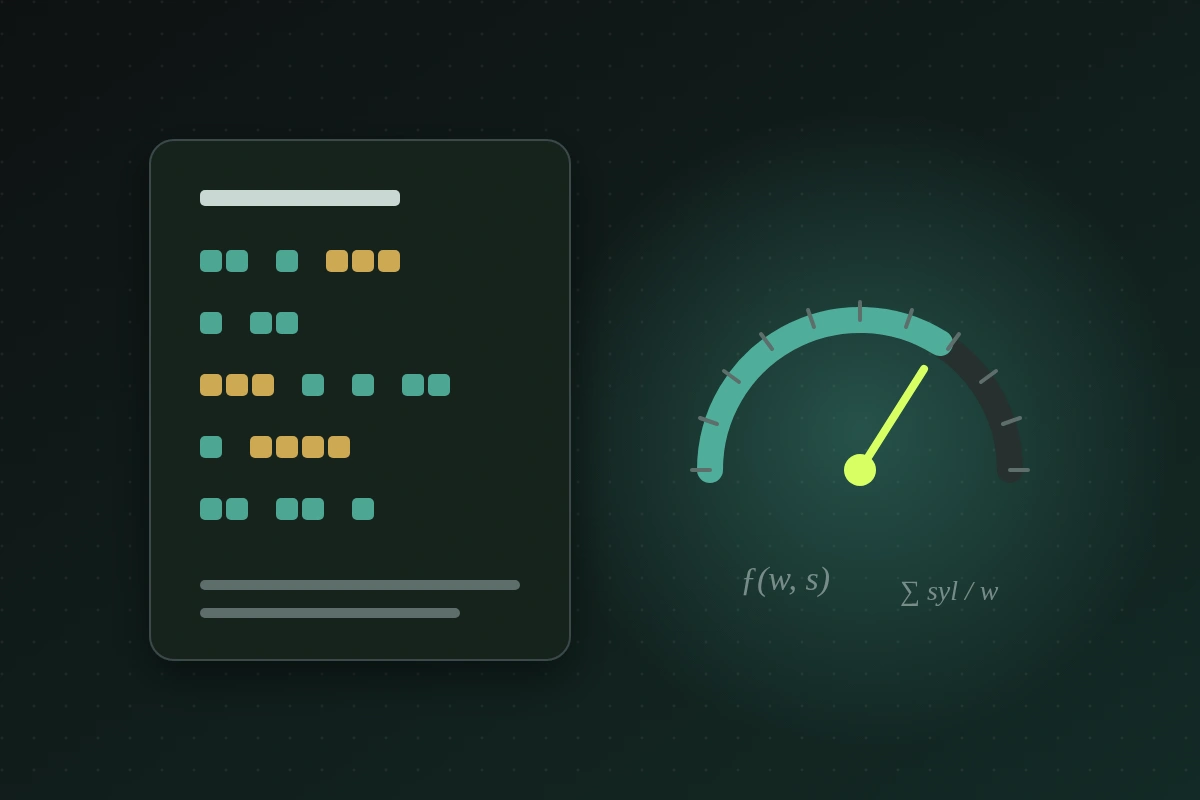
For decades, human readability formulas have been the standard way to evaluate how easily people can understand written content. Tools like Flesch–Kincaid, Gunning Fog, Coleman–Liau, and SMOG Index were built to determine whether a text is “easy,” “moderate,” or “difficult” for a general audience.
But the rise of AI-generated search and Zero-Click results has exposed a major limitation: These formulas were built for humans, not machines.
Still, they remain valuable—just in new ways. Understanding what they measure (and what they don't) is key for any modern content strategy.
What Exactly Is a Human Readability Formula?
A human readability formula is a mathematical test that scores a piece of writing based on features like:
- sentence length
- syllable count
- word complexity
- vocabulary difficulty
- paragraph structure
The goal is simple: Predict how easily a human reader can understand the text.
The most popular is the Flesch–Kincaid Grade Level, which estimates the U.S. grade level required to read the content.
Example: A score of 8.2 = “Eighth-grade reading level.”
Why These Formulas Became Industry Standards
Before AI and digital interfaces, human readability had clear practical value:
- Schools used it to match reading materials to student ability
- Businesses used it to ensure clarity in communications
- Newspapers used it to reach the broadest audience
- Government agencies used it for compliance (plain-language laws)
In the early 2000s, readability even became an SEO tactic. Marketers believed: “If the text is easier for humans to read, Google will rank it higher.”
For a while, they were right. But then the internet changed.
How Human Readability Formulas Actually Work
Most formulas use similar inputs:
- 1. Sentence length: Longer sentences = harder to read.
- 2. Word complexity: Words with many syllables or academic vocabulary = harder.
- 3. Structure simplicity: Short paragraphs, active voice, natural flow = easier.
Here’s the classic Flesch–Kincaid formula:
Flesch Reading Ease:
206.835 - 1.015 * (total words / total sentences) - 84.6 * (total syllables / total words)Higher score = easier text.
But note: This formula does not measure clarity, accuracy, truth, organization, or structure. Only surface-level human reading difficulty.
The Limitations of Human Readability in the AI Era
Human readability formulas were designed long before:
- AI Overviews
- Zero-Click results
- ChatGPT and Gemini
- Schema markup
- LLM content extraction
The formulas measure how a human sees the text—not how a machine interprets it.
A page can rank as “easy to read” while still being completely unusable for an LLM.
Example: A paragraph with perfect grammar, short sentences, and simple words can still be a disaster for AI if it lacks:
- semantic structure
- clear headings
- schema
- factual explicitness
- hierarchical organization
This is why the AI-IA Score exists—to measure machine readability, not human readability.
Why Human Readability Still Matters
Although human readability formulas no longer drive SEO the way they used to, they still play an important role—when used correctly.
✔ 1. Better User Experience: People still read websites, even in a Zero-Click world. Clear writing reduces friction and increases trust.
✔ 2. More conversions: Readable content = more customers completing forms, bookings, checkouts, and calls.
✔ 3. Higher engagement: Shorter sentences and simple language keep people on the page longer.
✔ 4. Complements AI readability: Human readability and AI readability are different—but complementary. AI prefers structure. Humans prefer clarity. The winning websites optimize for both.
Why Readability Alone No Longer Helps SEO
Google doesn't reward text simply because it “reads well.” Instead, its AI systems reward:
- structured data
- factual clarity
- semantic markup
- content hierarchy
- authoritative signals
- user intent matching
Human readability is one factor—but a small one. In 2025, you can have a beautifully written page that humans love — and still lose in AI search results because the structure isn't machine-friendly.
The Role of Human Readability in the AIA Matrix
Within the AIA Matrix, human readability fits under the concept of clarity—but only from the user’s perspective. It does not affect how AI parses, extracts, or summarizes content.
Machine readability uses:
- semantic tags
- hierarchy precision
- schema markup
- explicitness of facts
- accessibility signals
- AI token structure
Human readability uses:
- sentence simplicity
- paragraph length
- vocabulary clarity
Both matter, but for very different audiences.
Final Takeaway
Human readability formulas still matter—but they are no longer the primary driver of SEO or digital visibility. They help you communicate clearly with human readers, but they do almost nothing for AI-driven search systems.
In the AI era, businesses need two pillars: Human Readability and AI Readability (AI-IA Score). The future belongs to brands that optimize for both people and machines— with the clarity of a human writer and the structure of AI-first content engineering.